Pop-Up Concerts as Corporate Entertainment: The Format Brands Are Quietly Stealing from Music Festivals
Festival culture figured something out a long time ago: the best performances aren't always on the main stage.
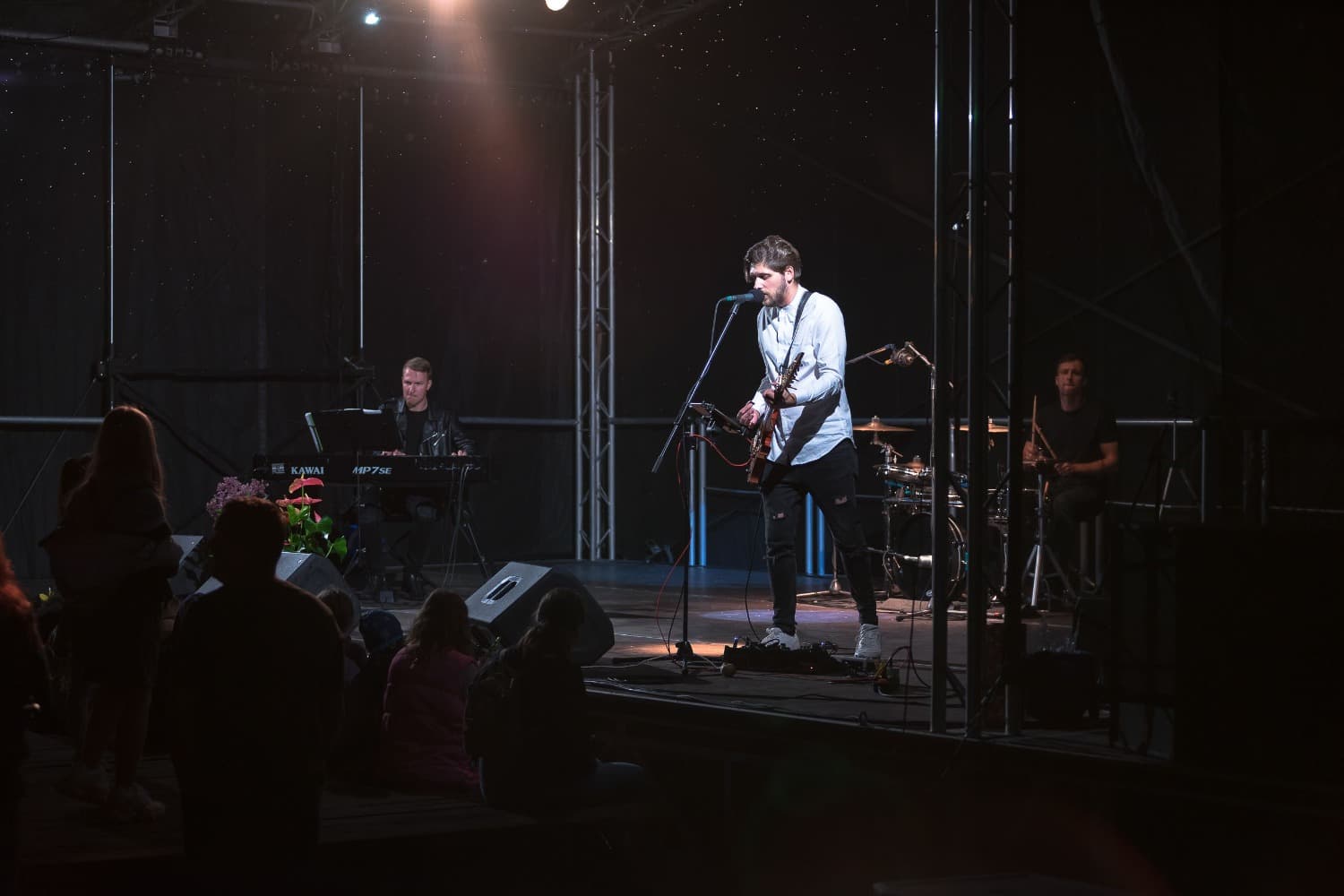
The secret sets. The intimate tent performances. The surprise artists at the smaller venue across the lot. These moments carry more emotional weight than the headline act partly because of their unpredictability, and partly because the scale makes them feel personal. You're close enough to watch the guitarist's hands. The artist isn't performing at a crowd — they're performing at people.
Corporate event planners are starting to replicate this, and the ones doing it well are fundamentally rethinking what live entertainment means at a business event.
What a Corporate Pop-Up Concert Actually Is
The format is simple: a live performance, often short-form (30 to 60 minutes), hosted in an intimate or unconventional setting as part of a larger corporate event. It might be the entertainment at a private dinner. It might be a standalone experience between sessions at a conference. It might be the anchor of a micro-event hosted alongside a major industry gathering.
What distinguishes it from a standard live performance booking is the emphasis on surprise, exclusivity, and physical intimacy. The pop-up concert isn't a concert that happens to be at a corporate event. It's an event experience built around a live performance, designed so that the performance itself is the memory.
Why It Works for Corporate Audiences Specifically
Corporate attendees are, as a category, harder to impress than general audiences. They've been to the dinners. They've sat through the cocktail receptions. They've heard the background jazz quartet. Their bar for "that was actually something" is higher than average.
The pop-up concert format clears that bar because it delivers something that most corporate event programming doesn't: surprise. Even when guests know there's entertainment on the agenda, the intimacy and energy of a live pop-up set — in a converted hotel suite, on a rooftop, in a private club space — lands differently than a programmed performance on a stage.
The scale creates closeness. Being forty feet from someone performing songs you know, with nothing between you and the music, is a different experience than watching from row 27. The guests who were half-present mentally for the panel session that afternoon are completely present for this.
The Talent That Makes This Work
Not every performer translates to the pop-up format. The artists who thrive in arenas are built for distance — their performance projects outward to thousands of people. The pop-up requires the opposite.
You want artists who know how to work a room. Who can make eye contact with people in the front row and make them feel like the song is for them specifically. Who can riff between songs without losing the audience, and who don't need a production apparatus around them to deliver something memorable.
Touring musicians who have built careers across a range of venues — who have played the big rooms and the small ones — usually have this skill. They've learned to calibrate. A musician who has spent years opening for major acts in 200-person venues, then graduated to theater-size shows, often brings exactly the range the corporate pop-up requires.
This is part of what distinguishes a touring professional from a "corporate band." The corporate band is built for this format in a generic sense. The touring musician is built for performance, in all its contexts. That difference shows.
How to Build It
Lead with the artist selection. The artist is the event. Everything else serves that choice. Pick before you've committed to the venue specifics.
Choose space over production. A raw, interesting physical space with good natural acoustics will beat a staged production setup in a characterless room almost every time. The pop-up format benefits from imperfection — a little grit in the environment makes the performance feel less produced and more real.
Keep the guest count intentional. There's no right number, but there is a threshold past which the intimacy dissolves. Fifty to one hundred and fifty is usually the range where the format works. Below fifty, it can feel sparse. Above one hundred and fifty, you start losing the close-quarters energy that makes it different from a regular concert.
Don't over-program it. The temptation is to wrap the pop-up in other event elements — a dinner before, a speaker after, a networking hour on both sides. That's fine in moderation. But the pop-up is a peak, not a middle. Give it space to be the thing people remember, not one item on an agenda.
Brief the artist on the room. The best pop-up performances happen when the artist understands who's in the room — what they do, what they've been talking about all week, what the energy is coming into the space. That context lets a smart performer make choices that feel specific rather than generic.
The Booking Advantage
Pop-up concerts for corporate events are not a mainstream booking category — which means most traditional agencies aren't set up to handle them well. You'll often end up paying for an entertainment act that's been designed for larger stages, routed through a bureau that doesn't distinguish between formats.
Book With Eva's direct booking model lets you have a different conversation from the start. You can identify artists whose work translates to intimate settings, reach them directly, and talk through what you're building before the booking is confirmed. The artist who plays Madison Square Garden on Friday can be the centerpiece of your forty-person pop-up on Wednesday — if you know how to find them and how to have the right conversation.
That's exactly the kind of booking Book with Eva was built for.Festival culture figured something out a long time ago: the best performances aren't always on the main stage.
