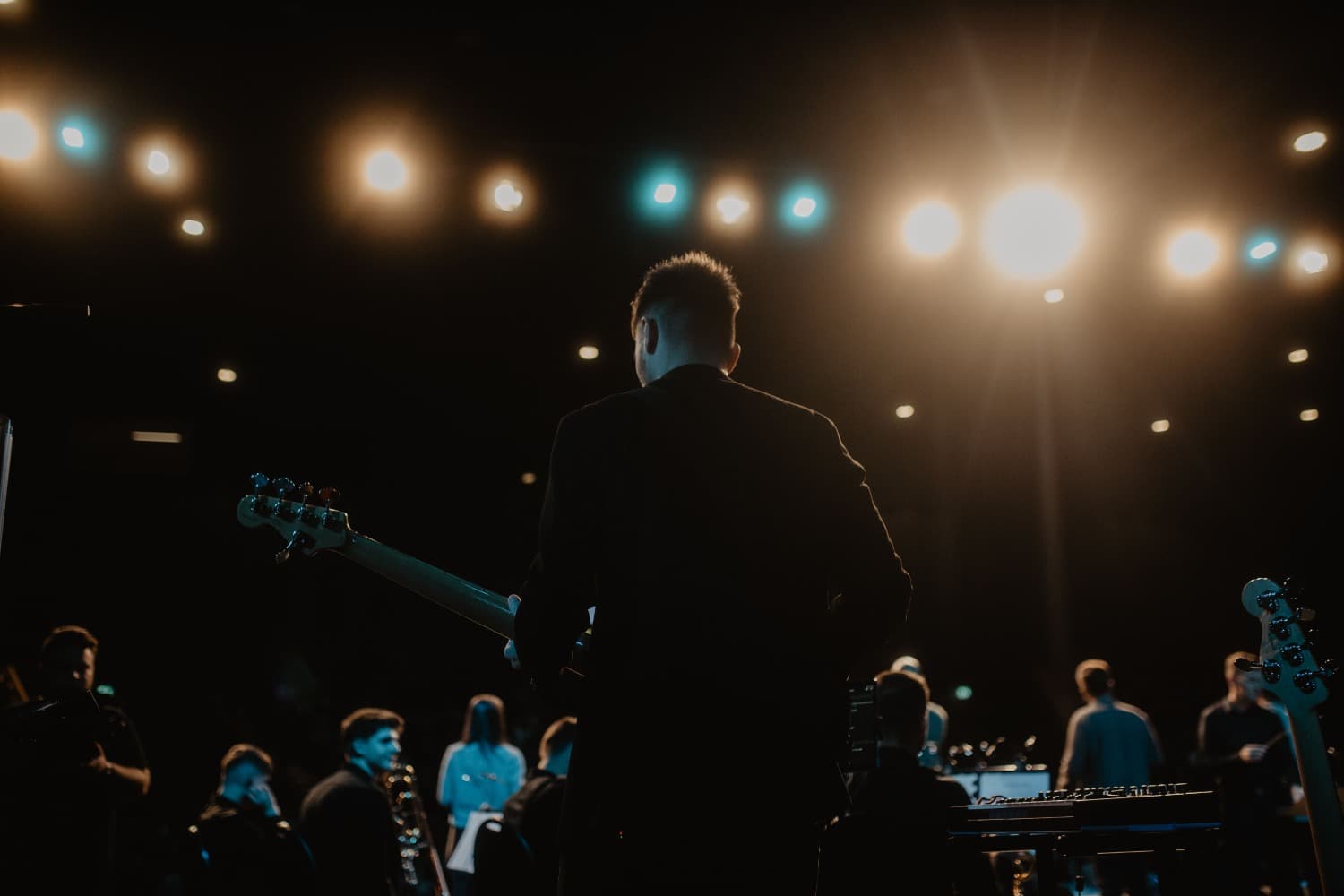
The Rise of the Musician-Speaker: Artists Who Do Both, and Why Planners Are Taking Notice
There's a profile of talent that doesn't fit neatly into any traditional booking category, and it's becoming one of the most in-demand formats at corporate events: the musician who can hold a room not just with a guitar, but with a conversation.
These aren't musicians who agreed to give a talk because their management thought it would generate income. They're artists who have built bodies of work — and bodies of experience — that have something genuinely worth saying to a business audience. Their career is the case study. Their path through failure, reinvention, industry disruption, and sustained creative relevance is the content.
When they perform, the room listens with their hearts. When they speak, the room listens with their minds. Getting both in the same booking is something very few formats can offer.
Why Musicians Translate So Well to the Speaking World
A career in music teaches things that business schools spend years trying to approximate. Musicians negotiate constantly — with labels, with managers, with collaborators, with markets that weren't what they expected. They build audiences from zero. They release work into the world with no guarantee of a return and adjust when the market tells them they're wrong. They manage creative teams, navigate personnel dynamics, and often run businesses that are more complex than they look from the outside.
The ones who have had big careers — who have toured extensively, put out multiple projects, survived the economics of a changing industry — have navigated more uncertainty than most executives. They just tell the story differently.
That storytelling ability is the other thing music develops. Musicians know how to build toward something. They understand pacing, tension, and release. They know when to go quiet so that the loud moment lands harder. These are instincts developed over years of performing for audiences, and they make for compelling speakers even before you account for the content itself.
What the Musician-Speaker Format Looks Like in Practice
The format has real range. At one end: a musician who delivers a structured keynote talk with no performance element, relying entirely on their story and insights. At the other: a hybrid experience where the artist performs first, then speaks, then opens for a fireside Q&A — with the performance serving as an emotional entry point for everything that follows.
The hybrid format tends to be the most powerful. The performance doesn't just entertain; it creates the emotional context for the talk. An artist who plays a song about resilience, then explains what they were going through when they wrote it, then draws the line from that experience to what the audience is navigating at work — that's a narrative sequence that no slide deck can replicate.
The music does the work of opening people up. The talk does the work of giving them something to take with them. The Q&A gives them a chance to make it specific to their world. Each element serves the next.
The Events Where This Format Performs Best
Leadership and company culture events. The themes that run through successful musical careers — perseverance, reinvention, authenticity, building something from nothing, managing creative tension on teams — map directly onto what leadership audiences want to hear about.
Sales kickoffs and motivational events. A musician who has performed in front of thousands of people, who has navigated career setbacks and come back stronger, whose body of work represents something built rather than inherited — that story lands for a sales team in a way that a professional motivational speaker often doesn't. It's real. You can verify it.
Innovation and industry disruption conferences. The music industry has been through more technological disruption than almost any other business sector. An artist who has navigated the shift from physical to digital to streaming has seen a version of what every industry is going through. That perspective has direct applicability.
Client appreciation dinners and high-end corporate events. A musician-speaker who performs a private set and then takes questions creates a guest experience that generates genuine goodwill and genuine conversation. The evening becomes something shared rather than simply consumed.
How to Evaluate the Talent
The musician-speaker category requires you to evaluate two separate skill sets and confirm they both hold up.
On the music side: look at their career trajectory, the rooms they've played, the projects they've put out. A musician who has built something long-lasting — who has toured at scale, built an audience, worked at the level where corporate event bookings are a meaningful but secondary income stream — brings credibility that a musician specifically seeking corporate speaking work often doesn't.
On the speaking side: watch footage. Find long-form interviews, podcasts, any existing keynote recordings. The most important thing is watching how they hold an audience when they're not playing. Does the room stay engaged? Do they have genuine insight or just compelling biography? Is there a through-line to what they're saying, or are they telling good stories without connecting them to anything actionable?
The best musician-speakers have both. The combination is rarer than you'd think.
Booking Directly Makes This Easier
The musician-speaker sits at the intersection of two different booking worlds, and traditional agencies often don't serve the format well. An entertainment agency doesn't know how to pitch the speaking element. A speakers bureau doesn't know what to do with the performance side. The artist ends up getting presented in fragments — as either a musician or a speaker — when the value is specifically in both.
That's where Book With Eva comes in. We understand the format because we work with talent across both worlds — and our direct booking model means you're never splitting the conversation between two agencies who each only see half the picture. From the first inquiry, you're talking to the right people about the full scope: the performance, the talk, the format, the audience, the vision. One platform, full picture, built for exactly this kind of booking.
The format deserves that kind of conversation. It's worth having it with the right people directly.
